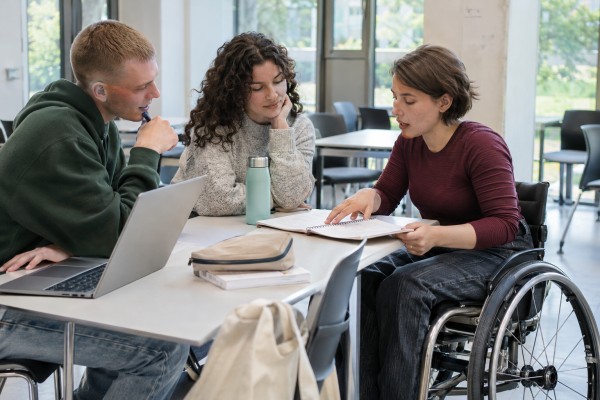
An Erasmus+ experience means learning, collaboration and participation in community life. Agora University of Oradea promotes inclusion and diversity, digitalisation, sustainability, and democratic participation and civic engagement for students, academic staff and administrative staff.
These principles apply to all types of mobility: studies, traineeships, teaching, training, blended mobility and blended intensive programmes (BIPs), both for participants travelling abroad from UAO and for those arriving from other institutions.
Inclusion, diversity and equitable access
Erasmus+ is open to eligible participants regardless of gender, age, background, disability, religion or other personal characteristics. UAO applies the principle of non-discrimination in information provision, selection, support, mobility activities and recognition of results.
Financial difficulties, health conditions, disabilities, family responsibilities, and social, geographical or language barriers can make participation more challenging. Contact the Erasmus Department early to discuss the support you need.
- You can request information in an accessible format and reasonable adjustments to communication, interviews or activities, according to your needs.
- The Erasmus Department works with you and the partner institution to assess your accessibility, orientation and support needs throughout your mobility.
- Grant top-ups and inclusion support based on actual costs may be available under the project's conditions. The Erasmus Department explains eligibility, the required documents and any approvals needed before expenses are incurred.
Needing support does not place you at a disadvantage in selection. Requests are handled confidentially, and medical documents or documents relating to personal social circumstances are not published. To arrange an individual discussion, write to erasmus@univagora.ro; you will receive guidance on submitting documents to authorised staff.
Read the Inclusion and Diversity Strategy for Erasmus+ Mobility (PDF, in Romanian).
Digitalisation and international online collaboration
Digital tools support mobility preparation, learning and collaboration with international partners:
- UAO's Moodle platform provides access to learning activities and materials according to enrolment and access permissions. Incoming participants receive guidance on the access needed for their agreed programme.
- Erasmus Without Paper (EWP) supports the electronic exchange of agreements between institutions for the workflows and partners covered by the system. The Erasmus Department explains how to complete and approve agreements; technical difficulties are addressed through a documented alternative.
- The Erasmus+ App helps students find information, preparation steps and opportunities. The institutional features available should be checked with the Erasmus Department.
- Online Language Support (OLS) offers language-learning resources. The Erasmus Department communicates access arrangements and the requirements applicable to your mobility.
We encourage joint online activities, the sharing of educational resources and the development of digital skills: checking information, protecting personal data, respecting copyright and using artificial intelligence responsibly. If you encounter barriers to digital access, ask for guidance. Valid documents already held in UAO's electronic records do not need to be submitted again without a justified reason.
Environmentally responsible mobility
Before departure, compare transport options, journey times, accessibility and environmental impact. Choose trains, buses or other eligible sustainable transport options when they are feasible for your route and personal circumstances.
The Erasmus Department explains the funding rules for sustainable travel, any funded travel days and the supporting documents required under the project. Check these conditions before buying tickets.
During your mobility and on campus, we encourage public transport, walking or cycling where possible, reducing paper consumption, reusing materials, separating waste and using water and energy responsibly. You can propose and share environmental initiatives with colleagues and partner institutions.
Democratic participation, civic engagement and European values
Respect for human dignity, freedom, democracy, equality, the rule of law and human rights is part of the Erasmus+ experience. We encourage intercultural dialogue, reasoned debate, critical thinking and efforts to counter discrimination and disinformation.
- Before mobility: learn about your rights, the host community, cultural diversity and the European Union's shared values.
- During mobility: take part, if you wish, in debates, cultural activities, volunteering and community initiatives announced by the university or local partners.
- After mobility: propose initiatives for the university community and share useful ideas and practices discovered at your host institution.
The Agora Students' Association provides a link to student life. Local and international students are invited to submit suggestions, join discussions and participate in activities open to the community. Representation in university governing bodies follows the applicable university regulations.
Community integration and support through CCOC
Students, academic staff and administrative staff from other universities undertaking mobility at Agora are invited to academic, scientific, cultural, civic and career guidance activities open to the university community. The same participation, registration and capacity conditions announced for each activity apply.
Orientation, resources and support contacts
Incoming students receive orientation and access to academic resources and university facilities on equal terms with local students. The Erasmus Department and the faculty help them connect with their academic adviser and with tutors or student volunteers supporting integration. Incoming staff are assigned a host contact and receive their agreed programme.
You can request guidance on accessing the UAO Library, learning platforms and language-learning opportunities, as well as information about accommodation, visas, residence permits and insurance.
What does CCOC do?
The Centre for Counselling and Career Guidance (CCOC) supports students' and graduates' personal and professional development through:
- career guidance, self-awareness and career planning;
- support with CV writing and interview preparation;
- psychological counselling and support with managing stress and emotional difficulties;
- workshops, meetings with employers, company presentations and labour market information.
Students participating in mobility can request these services and join the centre's open activities. Academic staff and other staff can attend events whose intended audience includes them. Appointments, the language of communication and specific arrangements are agreed with CCOC, with support from the Erasmus Department.
CCOC: services, activities, opening hours and contacts.
Research, conferences and an invitation to publish
We invite students, academic staff and researchers from other universities, including Erasmus+ participants, to submit articles to Agora's journals and develop joint papers with members of the UAO community.
- Agora International Journal of Juridical Sciences — research in legal sciences and the areas covered by its editorial policy.
- Agora International Journal of Economical Sciences — research in economics, management and related fields.
- International Journal of Computers Communications & Control — research within the journal's specialist scope.
Consult the list of UAO journals and the author guidelines. Submissions and publication are subject to the journal's scope, originality and integrity requirements, editorial review and the conditions published by each editorial team.
Students and staff from partner universities are also invited to propose papers, presentations or collaborations through student research groups, research centres and Agora conferences, according to the topics and calls for each activity. The Erasmus Department facilitates contact with organisers and academic coordinators.
Share your Erasmus+ experience
Have you taken part in mobility, or are you visiting us through Erasmus+? We invite students, academic staff and administrative staff to share their experience at internal Erasmus+ information sessions, meetings with colleagues and workshops for exchanging good practices.
You can talk about preparation, studies, traineeships, teaching or training, cultural integration, the support you received and the solutions you found. Academic staff and other staff are encouraged to present methods, tools and ideas that can be applied at UAO. Incoming participants can introduce their home university and opportunities for collaboration. Staff mobility outcomes are taken into account in professional appraisal and development, in accordance with UAO's regulations.
Former participants are invited to help inform future applicants and support the integration of international colleagues as Erasmus+ volunteers and ambassadors. Proposals for presentations or involvement should be sent to the Erasmus Department, which agrees a suitable format and timing with participants.
Participation in extracurricular activities and the use of your image in promotional materials are voluntary. Arrangements for publishing photographs or personal testimonials are discussed separately; neither your grant nor recognition of your results depends on agreeing to this. Reporting and professional knowledge-sharing obligations set out in mobility agreements remain applicable.
Contact, suggestions and feedback
For inclusion support, access to services, activity proposals, sharing your Erasmus+ experience or contact with CCOC, the students' association and journal editorial teams, please contact:
Erasmus+ Department — Agora University of Oradea
Piața Tineretului no. 8, Oradea, Romania
Email: erasmus@univagora.ro
You can also submit suggestions or report concerns about accessibility, discrimination, harassment or respect for your rights. Reports are handled confidentially by the responsible staff, without retaliation. Participants' feedback helps improve Erasmus+ support and activities.
See also the Erasmus+ documents and regulations and the Erasmus+ Student Charter — rights and obligations. Activities and invitations are announced in the organisers' sections and on the UAO Events page.